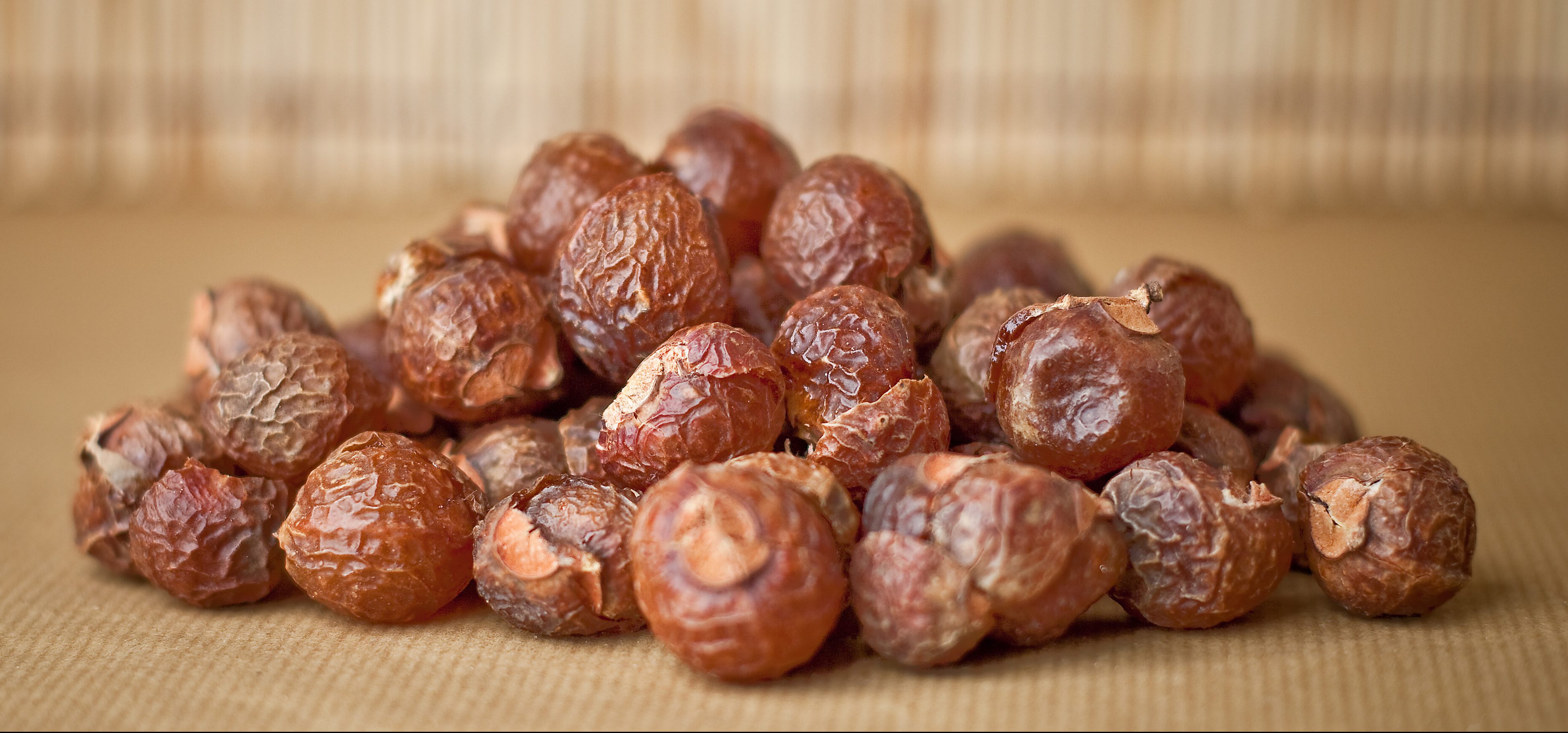
What are Soap nuts?
Soapnuts, Soapberries or Washing Nuts (रिठ्ठा – ‘Rittha’ in Nepali) are versatile washing products that are Natural, Eco-Friendly and Bio-Degradable and organic. Soapnuts contain ‘Saponin’, which has the ability to clean and wash. When in contact with water, it creates mild suds, which is similar to soap. Soapnuts can be used for cleaning basically anything, from washing clothes, like liquid soap, cleaning, and shining ornaments, household cleaner, etc.
Soapnuts are highly-effective and gentle at the same time. It will leave your laundry fresh and clean and compared to other detergents, its mildness will keep colors bright, maintaining the fabric structure of your clothes for longer periods. It can be used on all fabrics and at all temperatures. Soap nuts are allergy-free and hence are good for your skin especially good for babies, eczema and sensitive skin. This chemical-free product is excellent for washing children’s clothing.
Soapnuts are both Ecological and Economical when compared to other forms of detergents. 1 kg of soapnuts can be used for up to 150 loads of laundry. Soapnuts are found in Nepal, India and some other countries in the southeast. Soap nuts from Nepal are regarded as the best ones in the world.